Game engines · Unreal Engine

CAD files in Unreal Engine

A plugin for Unreal Engine 5.8. Open STEP, IFC, 3DM, IGES, ACIS, OCCT .brep and OpenSCAD files while your project runs — no import step, no cooking, no editor — and draw the whole assembly as one primitive: its parts addressable one by one, its edges exact, its faces drawn either as triangles or straight from the surfaces the file describes.

Get it free on Fab

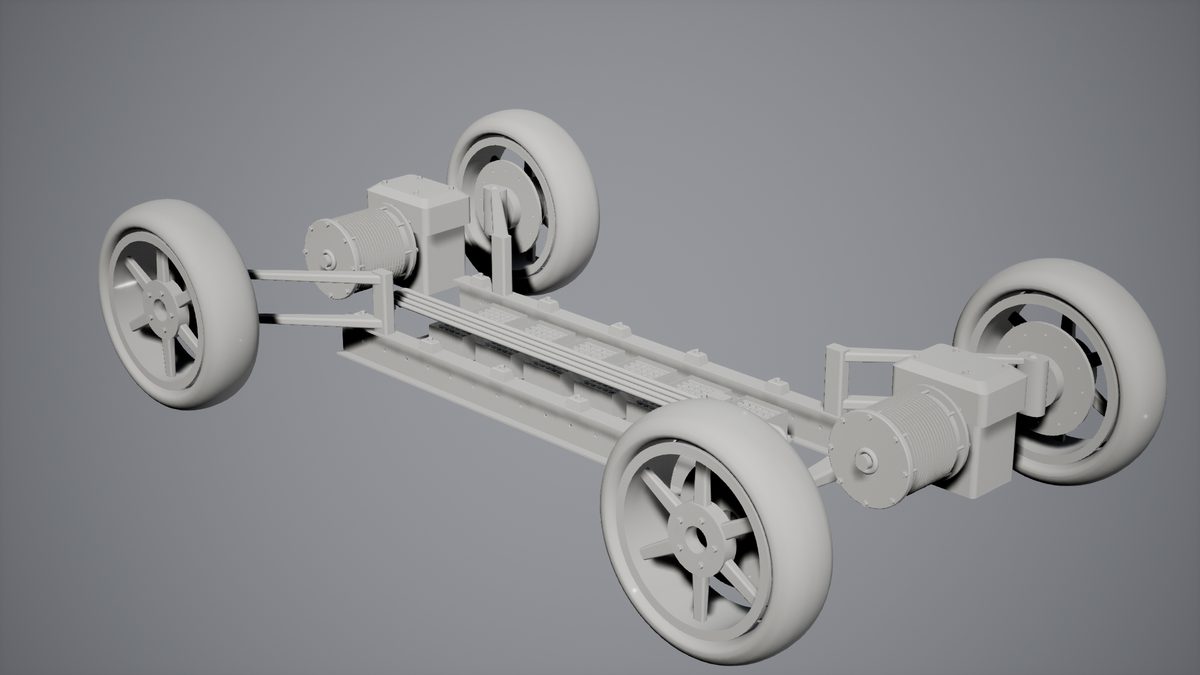
An electric skateboard platform — wheels, motors, battery modules and frame rails — drawn in Unreal Engine
One component, one file

Drop it in and load

An actor with a Cadaclysm component, one Load CAD File call, and the document is in the level. The whole assembly is a single primitive, however many parts it has, and every part stays addressable: move it, hide it, colour it, click it, ask what it is called. The pictures on these pages are shot through the plugin itself, on a model our own kernel built.

The quickstart →

The pages

Start here, then go deeper

  1. Quickstart — the plugin in a project, an actor in a level, a file on the screen.

  2. Loading files — the three actors, loading without stalling the frame, units and axes, schemas, what a load builds and what it costs.

  3. Triangles or surfaces — the two components: a part meshed once, or its faces evaluated on the graphics card every frame and never meshed at all.

  4. Edges and isocurves — the exact curves of the model, drawn over it or through it.

  5. Your own lines — grids, gizmos, boxes and paths, drawn by the same renderer as the model’s edges.

  6. Working with parts — colour, transparency, moving and hiding, materials, clicking, and asking the document questions.

  7. Static meshes — every part as an ordinary static mesh component: physics, Nanite and engine integration, and what they cost.

  8. Performance — levels of detail, culling, batching, Nanite, and what to reach for when a frame is short.

  9. Reference — every property, Blueprint node, console variable and command, and which of them take effect at run time.

What it is not

Three things worth knowing early

There is no import step. Files are read at run time by the same reader the rest of cadaclysm uses, so a packaged build opens a file a user brings with them. Nothing is cooked, and no asset is created.

A document is one primitive. An assembly of thousands of parts is one component and, where its parts agree, a handful of draw calls — not thousands of actors. The parts are addressed by index against that one primitive.

Choices that decide what a load builds are made before the load. Whether to mesh, whether to describe surfaces, which curves to build, whether to fit collision: these are read when the file is opened, because they decide what is built and held. Everything about how it is drawn afterwards — colour, lines, levels of detail — can change at run time. The reference marks each one.

Also working today: Godot, Unity, LÖVE and LÖVR, and every engine with a C boundary.